


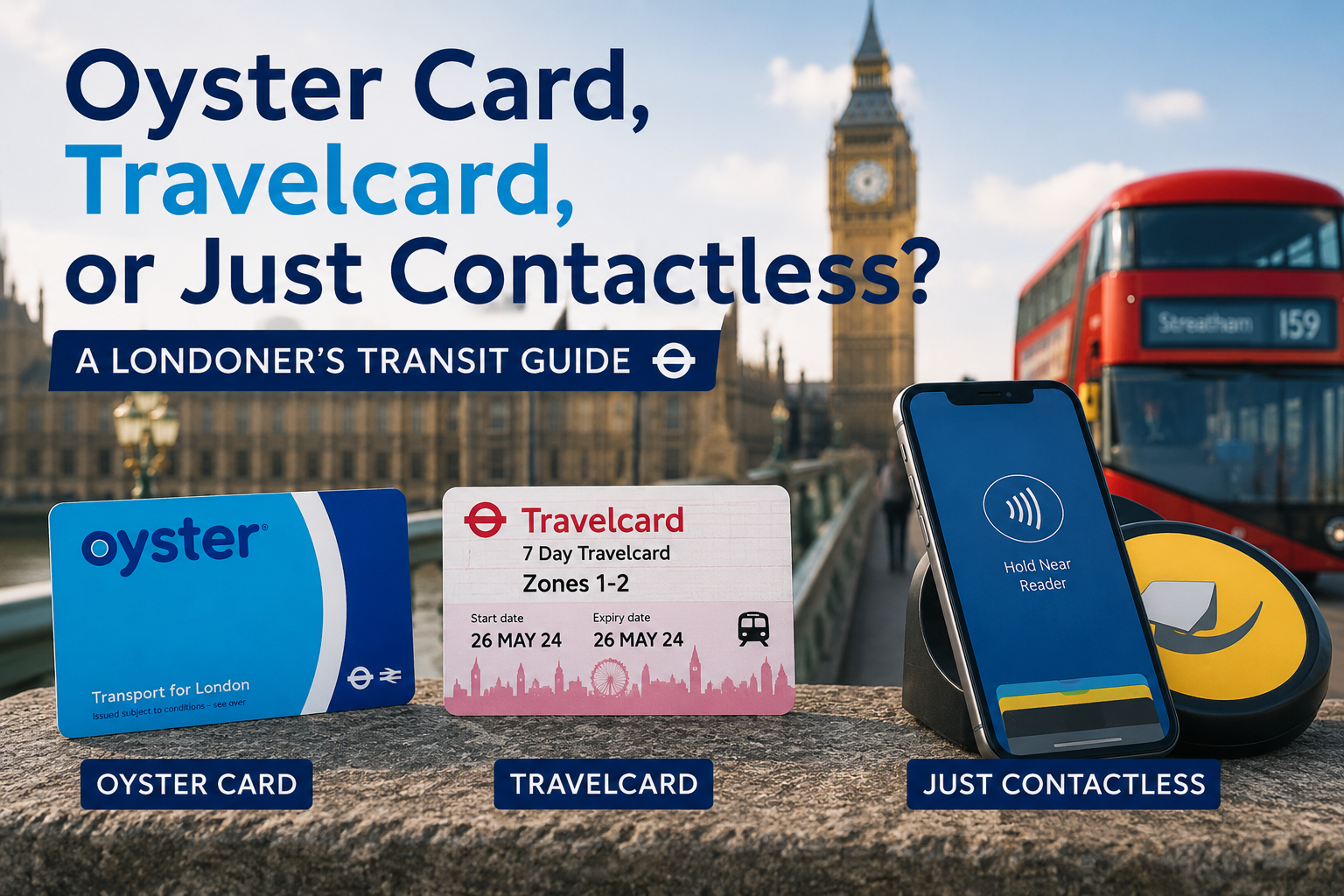
At Heathrow, St Pancras, or any Tube gate, visitors hit the same decision: Oyster card, paper Travelcard, or just tap a bank card?
Quick verdict
For most short London trips, contactless is the default winner. Oyster is best when you need discount linking (especially railcard or child setup). One-Day Travelcard is often poor value unless your usage pattern is specific.
Below is the practical decision tree, then a direct handoff to route planning with T-Bud.
Choose contactless if ...
- You are in London for less than a week.
- You do not need special UK rail-linked discounts.
- Your card or wallet has low foreign transaction costs.
Choose Oyster if ...
- You can link a National Railcard for off-peak discounts.
- You are setting up 11-15 Young Persons Discount cards.
- You want transport spend separated from your main card.
Choose Travelcard if ...
- You validated that your pattern beats PAYG daily caps.
- You need strict fixed-fare behavior over smart capping.
- You are making repeated high-volume trips in fixed zones.
Option breakdown: speed, cost, and edge cases
1) Contactless payment
No setup, no machine queue, no extra card to manage. For most visitors this is the smoothest operational choice, and daily capping logic protects against runaway fares.
2) Oyster card
Still highly relevant for niche-but-important use cases: discount linking, youth setup, and travelers who prefer preloaded transit balance behavior.
3) Paper Travelcard
Now a niche tool. For many short central-itinerary trips, One-Day Travelcard pricing can lose against pay-as-you-go caps.
The practical verdict
Solo/couple under one week: start with contactless. Families with 11-15s or railcard users: Oyster often wins. One-Day Travelcard: compute before buying.
Fares and rules change. Last checked: May 2026. Verify final numbers with TfL before payment decisions.
Update points for future revisions
- Daily caps by zone bands.
- Oyster issuance fee and policy.
- One-Day and 7-Day Travelcard pricing.
- Child discount and railcard linking rules.
Continue with the family transit version and the broader 3-day London structure.
Turn your fare decision into a smarter daily route
T-Bud helps you apply transport logic to your actual day plan, so you spend less time correcting routes and more time inside London.